
Health Care

The Health Care category shares information and guidance about health-related supports that help NDIS participants maintain wellbeing, independence, and quality of life across Perth and Western Australia.

This category includes articles on NDIS health care support, daily health management, personal wellbeing, and the connection between disability support and healthcare services. Content is designed to help participants, families, and carers better understand how health-related supports work alongside the National Disability Insurance Scheme.

At Inclusion Supports Australia, we take a holistic, participant-centred approach that respects individual needs, cultural values, and choice.

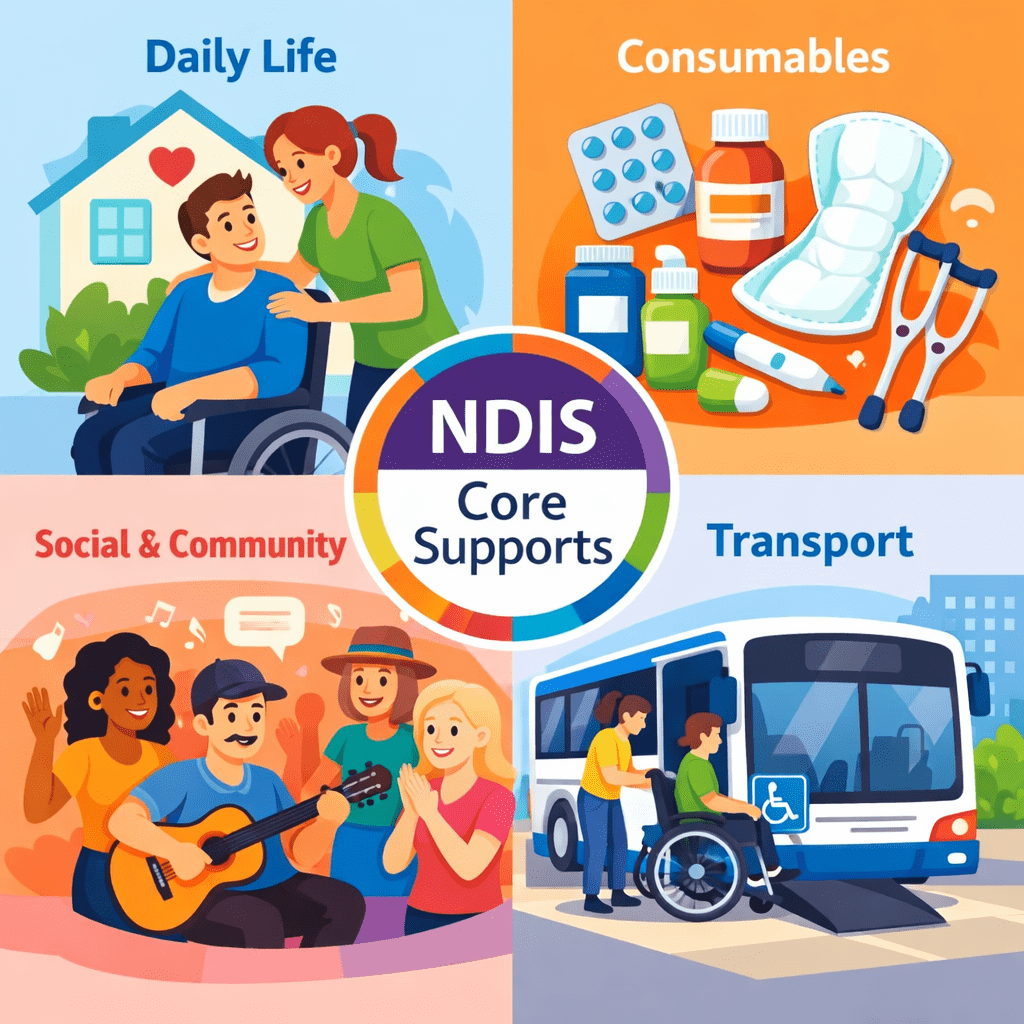
Infographic illustrating NDIS Core Supports categories: assistance with daily life, consumables, social and community participation, and transport.
Health Care, NDIS and Support Services

Understanding NDIS Core Supports Australia

Navigating the National Disability Insurance Scheme (NDIS) can feel overwhelming, especially when you’re trying to make sense of different budgets and funding categories. One of the most important parts of your NDIS plan is the Core Supports budget. Understanding how this budget works can help you get more value out of your plan and improve your daily life. What are Core Supports? Core Supports are one of three funding categories in an NDIS plan (the other two are Capacity Building and Capital Supports). They are designed to help you with everyday activities, current disability‑related needs and to work towards your goals. Unlike other budgets, Core Supports are flexible — you can usually move funds within the Core budget between different support types as your needs change. Core Supports usually fall into four categories: Core support category Purpose Typical examples Assistance with Daily Life Help with personal and household tasks so you can live independently. Personal care (showering, grooming), meal prep, cleaning, yard maintenance. Consumables Funding for everyday items you need because of your disability. Continence products, low‑cost assistive technology, wound‑care supplies. Assistance with Social & Community Participation Support to engage in community, social or recreational activities. Support worker to go to events, community access programs, help joining clubs. Transport Funding to help you travel to places that support your goals. Travel to work, education, appointments, or social activities. 1. Assistance with Daily Life This category covers support with personal tasks such as showering, dressing, grooming and feeding. It also covers household chores like cleaning, laundry, grocery shopping, meal preparation and yard work. For some participants it includes Supported Independent Living (SIL), drop‑in support or overnight care to help you stay in your own home. The aim is to support independence and reduce reliance on family carers. 2. Consumables Consumables funding lets you buy everyday items that relate to your disability. Examples include continence products, catheters, feeding supplies, low‑cost assistive technology (like adaptive cutlery or non‑slip mats) and wound‑care supplies. These are things you use regularly to maintain your health and independence. 3. Assistance with Social & Community Participation Participating in the community is crucial for wellbeing. This category funds support workers and programs that help you attend social, economic or recreational activities. It might include help to attend local clubs, classes, events, volunteering or work experience. The goal is to build confidence, skills and connection. 4. Transport Transport supports help you get to work, school, appointments or community activities when you can’t use public transport because of your disability. The funding amount is tailored to your circumstances. A Local Area Coordinator (LAC) can explain how you can use your transport budget. Flexibility within Core Supports One of the best features of Core Supports is flexibility. In most cases you can move funds between the four categories to meet your immediate needs. For instance, if you need more support at home but less transport funding, you may be able to reallocate within your Core budget. However, transport funding often comes with specific rules about how it can be used, so it’s important to check with your LAC or plan manager. Core vs. Capacity Building vs. Capital Supports To make the most of your NDIS plan, it helps to understand the difference between the three budgets: Core Supports – assist with day‑to‑day needs and participation; most flexible budget. Capacity Building Supports – fund skill‑building supports such as therapies, training, support coordination and employment supports. This budget is not transferable between categories. Capital Supports – pay for high‑cost items like assistive technology, vehicle or home modifications. Funds can only be used for their approved purpose. Understanding these differences will help you plan and advocate for the right mix of supports. How Inclusion Support Services Can Help At Inclusion Support Services, we specialise in delivering personalised supports to NDIS participants across the City of Gosnells and throughout Australia. Our experienced team can assist with all four Core Supports categories and help you use your funding effectively. We offer: Personalised in‑home support: help with personal care, meal prep, household chores and building daily living skills. Community participation: support to attend local events, classes and social activities, helping you feel connected and engaged. Consumables guidance: advice on sourcing and ordering assistive technology and essential supplies. Transport support: assistance with transport coordination and travel training, ensuring you can get to work, study or appointments. Why Choose Us? Local expertise: We understand the unique needs of people in the City of Gosnells and surrounding areas. Nationwide reach: We also support participants across Australia, with a network of staff and partners who know the NDIS inside out. Flexible services: Our supports are tailored to your goals and can change as your needs change. Experienced team: Our support workers and coordinators are trained, compassionate professionals. Ready to Make the Most of Your Core Supports? If you’d like to understand your Core Supports budget or need help implementing your NDIS plan, we’re here to help. Contact our friendly team to discuss your needs, learn more about our services or request a referral. 📞 Phone: (08) 6157 0990 📧 Email: info@inclusionsupports.com.au 🌐 Website: www.inclusionsupports.com.au 📍 Service area: City of Gosnells and across Australia Useful Links NDIS support budgets and Core Supports guide – official information on support budgets and flexibility. Understanding NDIS support categories – clear explanations and examples of each Core Supports category. NDIS price guide & budget planner – detailed article about Core Supports rules, examples and budget planning. By understanding and using your NDIS Core Supports wisely, you can live more independently, participate in your community and move closer to your goals. Inclusion Support Services is here to help you every step of the way.

NDIS Independent living by Inclusion supports
Disability, Health Care, NDIS and Support Services

Understanding NDIS Personal Care Services: A Friendly Guide for Everyday Life

For many people and families navigating the NDIS for the first time, terms like NDIS personal care services can feel a little confusing. At Inclusion Supports Australia, we understand how overwhelming the system can seem, especially when you are trying to make the best decisions for yourself or for someone you care about. Therefore, we aim to make every support, every process, and every explanation simple, human, and easy to understand. NDIS personal care is more than a funded category—it’s a pathway to dignity, independence, and peace of mind. In fact, whether someone receives supports at home, in the community, or through supported independent living, personal care often plays a major role in building everyday independence. So, let’s take a friendly walk through what personal care means, how it connects with independent living NDIS, and why families across Western Australia rely on high-quality, person-centred support to enhance daily life. What are NDIS Personal Care Services? NDIS personal care services are supports designed to help people manage the daily activities of life. These services are tailored around what each person needs to stay safe, comfortable, and independent. As a result, they help maintain dignity, build confidence, and support meaningful routines. They can include assistance with: Showering, bathing, and hygiene Getting dressed Grooming and personal presentation Toileting Mealtime support Mobility support Medication reminders Skin integrity and pressure care Morning and evening routines In Western Australia, people searching for disability services WA often come to us because personal care brings more ease and comfort into day-to-day life. Additionally, it gives people the confidence to take charge of their routines, while knowing a respectful and trained support worker is there when needed. Why personal care is such an essential support Personal care is not simply about completing tasks—it’s about creating opportunities for independence. At Inclusion Supports Australia, we see the impact every day: people feel more capable, families feel more supported, and daily routines become smoother and safer. Furthermore, the right personal care support helps people: Maintain dignity Enjoy safer daily routines Feel more confident in their homes Reduce stress and fatigue Stay connected to their community Make their own choices about how life should look For family members who are providing informal care, personal care supports can also reduce pressure and create a healthier balance at home. Consequently, this often leads to stronger, happier relationships. How personal care links to Supported Independent Living (SIL) Many NDIS participants exploring personal care also hear terms like: NDIS supported independent living supported independent living SIL NDIS NDIS SIL independent living NDIS So how does it all connect? In simple terms, personal care focuses on daily routines, while SIL focuses on the living arrangement and ongoing support. Therefore, they work together naturally. Supported Independent Living (SIL) provides help for people who want to live independently—either alone or with housemates—while still having access to regular support. Meanwhile, personal care is one of the key components included inside SIL arrangements. This may include: Morning routines Assistance preparing meals Help with household tasks Evening routines Overnight support Medication and mobility support Altogether, SIL gives people the chance to live with freedom and choice, while personal care ensures daily life stays safe, comfortable, and manageable. Combined, they create a strong foundation for long-term independence. Personal care that is truly personal Every person has unique preferences, routines, and comfort levels. Because of this, our team takes time to understand what each person needs—not only to stay safe but to feel respected and empowered. We focus on: Listening first Respecting cultural and personal preferences Matching suitable support workers Maintaining consistency Encouraging independence wherever possible Ensuring privacy and dignity at all times Ultimately, personal care should feel natural, supportive, and tailored—not rushed or one-size-fits-all. Our goal is always to make sure each person feels heard, included, and respected. Who can access NDIS personal care services? Personal care is funded through a participant’s Core Supports, under “Assistance with Daily Living” or “Self-Care Activities.” Most participants who need help with daily routines already have it included in their plan. However, many people aren’t always sure how to confirm this, and that’s where guidance helps. You may be eligible if you need assistance with: Getting ready in the morning Toileting, hygiene, or showering Eating or preparing meals Moving around your home safely Managing daily routines Ongoing support in a SIL environment If someone is unsure whether personal care is included in their plan, our team can help review the plan and explain everything in simple terms. In addition, support should never feel confusing or stressful. For personalised guidance, feel free to reach out through ourContact Page. Choosing the right personal care provider Finding a provider who understands your needs, values, and goals is essential. After all, a good provider can transform the way personal care feels in daily life. When comparing providers, look for: ✔ Respectful, well-trained staff Support workers should make you feel safe and valued. ✔ A person-centred approach Your routines and independence must always come first. ✔ Flexibility and choice Support should fit your life—not the other way around. ✔ Consistency Familiar support workers build trust and comfort. ✔ Experience delivering SIL and community supports This ensures smooth support across different areas of life. Because of these reasons, Inclusion Supports Australia prioritises respect, dignity, and individual needs in every service. How Inclusion Supports Australia can support your journey Whether someone needs a little daily assistance or full-time support through supported independent living, our team is here to help. We support individuals with a range of abilities, backgrounds, and needs across WA. Ultimately, our focus is on dignity, independence, and personalised care. Getting started is simple. You can submit a referral anytime through ourReferral Page. Or, if you have questions, our team is happy to assist through ourContact Page. Final thoughts Understanding NDIS personal care services can open the door to a more confident, safe, and independent life. Additionally, whether you receive support at home, in the community, or as part of a SIL

NDIS therapy services in Perth, including occupational therapy, physiotherapy, and speech therapy to help participants achieve their goals.
Health Care, NDIS and Support Services

NDIS Therapy Services: Helping You Reach Your Goals

The National Disability Insurance Scheme (NDIS) is designed to give people with disabilities the right supports to live independently and achieve their personal goals. Among the most impactful supports available are NDIS therapy services. These services are tailored to meet individual needs and help participants build skills, improve wellbeing, and live more fulfilling lives. What Are NDIS Therapy Services? NDIS therapy services cover a wide range of allied health supports delivered by qualified professionals. These therapies aim to enhance everyday functioning and support participants in achieving goals outlined in their NDIS plans. Depending on individual needs, therapy services may include: Occupational Therapy – Helping participants build independence in daily activities such as cooking, self-care, and mobility. Physiotherapy – Supporting physical strength, movement, and rehabilitation. Speech Pathology – Improving communication skills, speech, and swallowing. Psychology and Counselling – Assisting with mental health, emotional wellbeing, and coping strategies. Exercise Physiology – Promoting physical activity and building confidence through safe exercise. These therapies are highly flexible and can be delivered at home, in the community, or via telehealth depending on what works best for the participant. How Do Therapy Services Help? The goal of NDIS therapy services is to empower participants to reach their full potential. Each therapy is personalised, focusing on the goals that matter most to the individual. Some common benefits include: Developing independence in daily routines Enhancing mobility and physical health Improving communication and social skills Building confidence and self-esteem Supporting mental health and resilience Encouraging community participation and social connections For example, a participant may work with an occupational therapist to learn strategies for cooking meals independently, or with a speech therapist to develop clearer communication for work and social settings. Why Therapy is Goal-Focused A key feature of NDIS therapy is that it’s not just about treatment—it’s about goal achievement. Each participant’s NDIS plan is built around their goals, whether that’s gaining employment, improving mobility, or strengthening relationships. Therapy providers work alongside participants to create practical steps that lead to real progress. This goal-focused approach ensures therapy services are meaningful, measurable, and directly linked to improving quality of life. How Inclusion Supports Australia Can Help At Inclusion Supports Australia, we are dedicated to delivering high-quality NDIS therapy services that make a genuine difference. Our team of therapists and support workers collaborate with participants to design therapy programs that reflect their goals, lifestyle, and preferences. Here’s why participants choose us: Personalised care tailored to your NDIS goals Qualified professionals across a wide range of therapy disciplines Flexible service delivery at home, in the community, or online Compassionate support that respects your independence and dignity Get Started Today If you’re ready to explore how NDIS therapy services can help you or your loved one achieve meaningful goals, we’re here to guide you every step of the way. Contact Us to learn more about our therapy services.Or complete our Referral Form and one of our friendly team members will be in touch. With the right support, your goals are within reach. Let us help you take the next step toward a more independent and empowered future.

Community, Disability, Health Care, NDIS and Support Services

Understanding In-Home Care NDIS Perth

The National Disability Insurance Scheme (NDIS) has transformed the way Australians living with disability access support, offering greater choice, flexibility, and independence. One of the most valued services under the scheme is in-home care. For participants in Perth, In-home care NDIS Perth services provide personalised assistance that helps individuals live comfortably and safely within their own homes while maintaining independence and community connection. What is In-Home Care Under the NDIS? In-home care refers to the practical and personal support delivered to participants in their own homes. This can range from daily living assistance to more specialised care, depending on individual needs and NDIS funding. The goal is to empower participants to achieve their personal goals, stay connected to their communities, and enjoy a good quality of life without being forced into residential care unless necessary. Common supports offered through in-home care NDIS Perth include: Personal care such as bathing, grooming, and dressing Meal preparation and dietary support Medication reminders and health management assistance Domestic help including cleaning, laundry, and home maintenance Community participation support (transportation, social outings, appointments) Overnight or 24/7 care for those with higher support needs These services are tailored to each participant’s NDIS plan, ensuring flexibility and respect for personal choices. Benefits of In-Home Care NDIS Perth Choosing in-home care through the NDIS comes with a wide range of benefits for both participants and their families. Some of the most significant include: Independence and ComfortStaying in a familiar environment makes daily life easier and less stressful. In-home care allows participants to live life on their terms while still receiving the support they need. Personalised SupportUnlike residential care facilities, in-home care is designed around the individual. Participants can decide when and how they receive support, giving them greater control over their daily routines. Family Peace of MindKnowing that a loved one is being looked after by trained support workers reduces the pressure on families, allowing them to focus on spending quality time together. Community ConnectionWith the right in-home supports, participants can continue engaging in community activities, socialising, and attending appointments without feeling isolated. Flexibility and ChoiceThe NDIS framework ensures participants can choose the providers and types of care that best suit their needs. This flexibility is a key reason why many people in Perth are turning to in-home care services. How to Access In-Home Care Through NDIS in Perth Accessing in-home care NDIS Perth begins with an approved NDIS plan. During the planning process, participants outline their goals and daily support requirements. If in-home care is part of achieving those goals, funding will be allocated accordingly. Steps to get started include: Discussing Needs at Planning Meeting – Clearly outline the type of support needed at home. Reviewing Plan Funding – Ensure that daily living supports or core supports funding is included. Choosing a Provider – In Perth, many registered and non-registered NDIS providers offer in-home care services. Participants can select based on preferences, cultural needs, or location. Customising Support – Once a provider is chosen, participants can tailor services to match their daily lifestyle. It’s always recommended to work with a provider experienced in delivering in-home care, as they understand the balance between independence and support. Why Choose In-Home Care NDIS Services in Perth? Perth has a strong network of NDIS providers committed to supporting people with disabilities. By choosing local in-home care services, participants benefit from support workers who understand the Perth community, local healthcare systems, and accessible facilities. Many providers also offer multilingual staff and culturally sensitive care, ensuring participants from diverse backgrounds feel understood and respected. Final Thoughts For NDIS participants and their families, in-home care NDIS Perth offers an invaluable pathway to independence, comfort, and dignity. With tailored supports ranging from personal care to community access, individuals can continue living fulfilling lives within the comfort of their own homes. Whether you are exploring NDIS options for yourself or a loved one, understanding in-home care is the first step toward building a support plan that truly meets your needs. By working with trusted local providers, participants in Perth can enjoy peace of mind, knowing that quality care and independence go hand in hand.

Scroll to Top