
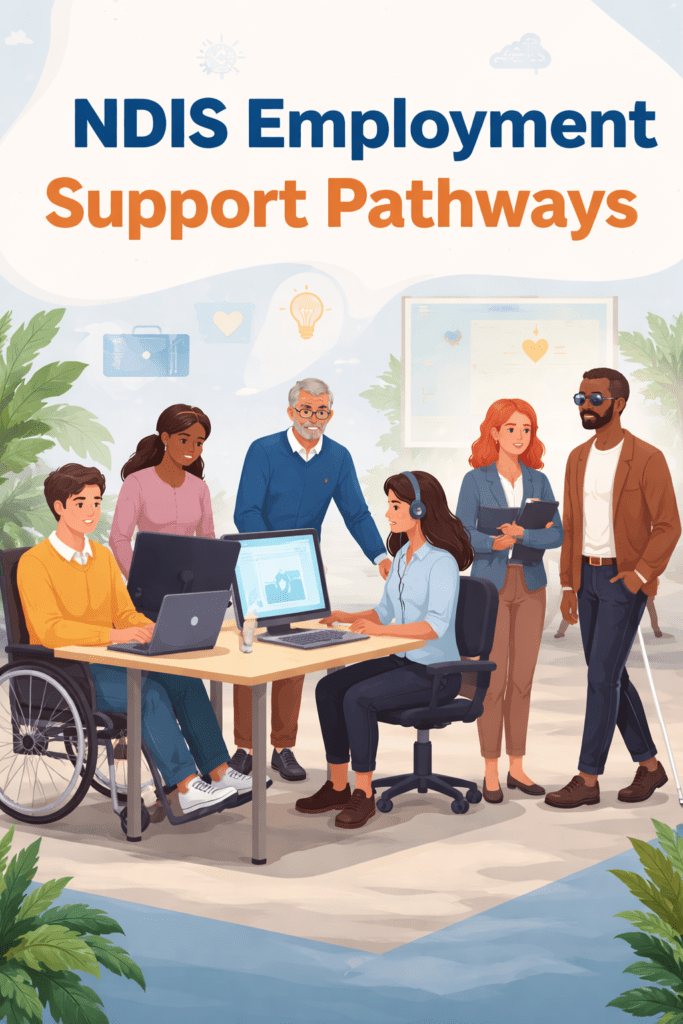
NDIS Employment Support Pathways: Empowering Inclusive Careers in the City of Gosnells
Employment is more than a paycheck – it provides purpose, connection and independence. For people living with disability, finding work can be complex. That’s why the National Disability Insurance Scheme (NDIS) funds support pathways to help participants prepare for, find and keep jobs. As Inclusion Support Australia, we are proud to deliver these services across every suburb of the City of Gosnells — including Thornlie, Canning Vale, Beckenham, Kenwick, Huntingdale, Maddington, Langford, Southern River and many more. In this blog we explain how NDIS employment supports work, highlight the latest reforms, and show how we partner with participants to build inclusive careers. We also draw on the City of Gosnells’ commitment to equal employment opportunities, ensuring our local community is truly inclusive. What are NDIS Employment Support Pathways? Capacity Building Employment Assistance The NDIS provides capacity‑building employment assistance to help participants of all ages prepare for and gain sustainable employment. Supports may include: Gaining work experience to complement school education or transitioning from school to further education. Building foundation skills such as time management, communication and independent travel. Developing a career plan, changing jobs or obtaining alternative employment after onset of disability. Connecting participants with Disability Employment Services (DES) providers or other employment services for ongoing workplace support. Providers like Inclusion Support Australia work closely with participants, planning tailored activities to meet individual needs. Supports may include work experience placements, development of vocational skills, job customisation, employer engagement and assisting participants to secure a job that matches their interests. Supports in Employment NDIS participants can use supports in employment funding to receive extra help in the workplace. This funding gives participants choice and control over where and how they work and lets providers assist in various settings such as government agencies, social enterprises, micro‑businesses and family‑run businesses. Pricing arrangements ensure providers claim supports appropriately, dividing group‑based supports equally among participants. School Leaver Employment Supports (SLES) For young people aged 16–22 leaving school, School Leaver Employment Supports (SLES) provide practical assistance during the transition to work or further training. An NDIS‑funded SLES program offers hands‑on support, skill development and real‑world experience. The focus is on individualised pathways – helping participants explore different roles, discover what kind of job suits them and build confidence. SLES participants receive training in communication, time management, resume building and interview practice. They may participate in internships, volunteering or supported job placements. Skills taught include workplace etiquette, travel training, problem‑solving and ongoing employment assistance. To access SLES, participants should discuss their employment goals with their NDIS planner or Local Area Coordinator and ensure SLES is included in their plan. Finding and Keeping a Job & Customised Employment Beyond SLES, the NDIS offers Finding and Keeping a Job supports. Funding can cover job coaching, workplace assessments, mentoring and assistive technology. Eligibility typically applies to people aged 15 or over who have employment goals in their plan and need support due to their disability. Some participants may benefit from customised employment – support to find or create a role tailored to their strengths and interests. A provider can help identify skills, set goals, contact inclusive employers and provide on‑the‑job support. National Reforms: NDIS Participant Employment Strategy 2024–26 The NDIA’s Participant Employment Strategy 2024‑2026 outlines priority actions to improve employment outcomes for people with disability. Key focus areas include: Quality Planning – building staff capability, improving planning systems and focusing on early intervention for young people aged 14–25. The aim is to give participants more opportunities to talk about work and ensure they have real choice and control over where they work. Efficient and Effective Supports – improving provider practices, measuring performance and ensuring young people receive age‑appropriate employment supports. Supporting Employers – activating employers, demonstrating success, leading by example and leveraging purchasing power to encourage businesses to hire NDIS participants. Integrated Ecosystem – improving data collection, collaboration and seamless access to supports. The strategy includes measures to track outcomes, such as monitoring the number of participants expressing a desire to work and assessing planning decisions at key transitions like leaving school. These reforms ensure that employment supports remain evidence‑based and focused on inclusive employment. Local Commitment: Employment and Inclusion in the City of Gosnells The City of Gosnells’ Disability Access and Inclusion Plan (DAIP) 2024‑2028 emphasises that people with disability must have the same opportunities as others to obtain and maintain employment. The plan outlines practical strategies: Equal employment opportunities – the City regularly reviews its recruitment policies to ensure they meet Equal Employment Opportunity legislation and encourages people with disability and those from diverse backgrounds to apply. Interview processes remain accessible by inviting applicants to request assistance. Innovative recruitment and retention – the City works with support organisations to provide traineeships and volunteering opportunities for people with disability and invites WA Disability Enterprises to quote or tender for services. It also ensures workplace adjustments (e.g., accessible parking) are made to remove barriers. Monitoring and reporting – progress on DAIP actions is reported in annual reports, and the plan is reviewed every five years. The DAIP reveals there were 2,331 NDIS participants in the City of Gosnells as of 31 March 2022, and 5,987 residents (4.7 % of the population) reported needing help with daily activities due to disability. These numbers illustrate the importance of local services like Inclusion Support Australia that ensure residents can access employment opportunities close to home. Why Work Experience and Skill‑Building Matter Work experience isn’t just a résumé booster; it builds confidence, communication skills and practical abilities that cannot always be learned in a classroom. It also allows participants to explore different roles and uncover their strengths, helping shape meaningful career paths. Real‑world experience improves employability by providing references and demonstrating to employers that participants can succeed. Skills developed through SLES and other employment supports include: Workplace etiquette and expectations – understanding dress codes, punctuality, teamwork and communication. Resume building and interview skills – crafting job‑ready résumés and practising interviews. Travel training and time management – learning to use public transport and plan schedules. Problem‑solving and adaptability – staying calm under pressure and adapting to new roles or routines. Ongoing employment assistance –